

KIP Kuliah Budget Continues to Increase, Government Ensures Sustained Access to Higher Education
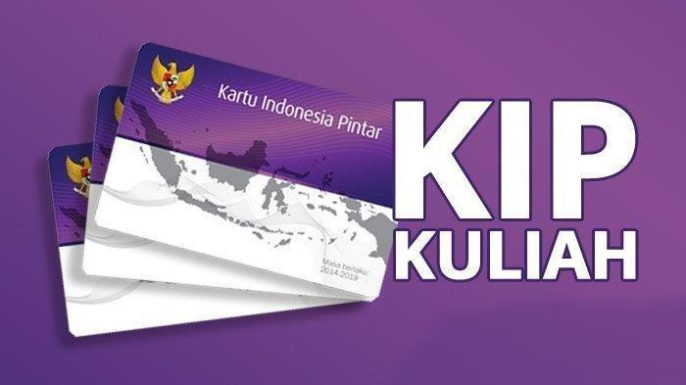
Jakarta—The Ministry of Higher Education, Science, and Technology (Kemdiktisaintek) has affirmed that the budget for the Kartu Indonesia Pintar (KIP) Kuliah Program continues to increase from year to year. This commitment is part of the government’s ongoing efforts to expand access to higher education for students from underprivileged families, Friday (20/2).
Based on data from the Center for Higher Education Financing and Assessment (PPAPT) of Kemdiktisaintek, the number of KIP Kuliah beneficiaries has continued to rise each year since 2020. This trend is evident both in the number of newly admitted student recipients and in the total number of beneficiaries overall, including those currently pursuing their studies (ongoing).
In 2020, the KIP Kuliah budget was recorded at IDR 6.5 trillion. The allocation continued to increase significantly, reaching IDR 14.9 trillion in 2025 with a target of 1,044,921 student beneficiaries based on the Budget Implementation List (DIPA). In Fiscal Year 2026, the KIP Kuliah budget allocation based on DIPA increased to IDR 15,323,650,458,000, targeting 1,047,221 student beneficiaries.
On various occasions, the Minister of Higher Education, Science, and Technology (Mendiktisaintek), Brian Yuliarto, stated that Kemdiktisaintek continues to oversee the KIP Kuliah program to ensure that its budget is not reduced and that the program can be implemented even more effectively.
Minister Brian stated that KIP Kuliah is a strategic instrument to ensure equal opportunities in higher education. Therefore, Minister Brian is committed to continuing to expand access to education through the KIP Kuliah program, which serves as a “Bridge of Hope” for high-achieving students with economic limitations to continue their studies and to ensure that economically disadvantaged yet accomplished Indonesian students can pursue and complete higher education. Kemdiktisaintek will continue to ensure that the living allowance provided through KIP Kuliah is the full right of the students, and universities as well as all other parties are prohibited from imposing any charges on KIP Kuliah recipients.
KIP Kuliah Distribution Scheme
With regard to differences in the distribution of recipients at certain higher education institutions, the Center for Higher Education Financing and Assessment (PPAPT) of Kemdiktisaintek, as the manager of KIP Kuliah, explained that such variations may be influenced by several factors.
The distribution of KIP Kuliah quotas during the 2020–2024 period was based on the capacity of each study program according to its accreditation at each university. This scheme placed institutional capacity and program quality as the basis for quota allocation, resulting in relatively stable numbers of recipients at each university from year to year, with the percentage of recipients at each institution remaining relatively consistent.
Starting in 2025, PPAPT Kemdiktisaintek was assigned to manage the KIP Kuliah program. To improve targeting accuracy, priority for recipients at Public Universities (PTN) is given based on the number of holders of the Senior High School Kartu Indonesia Pintar (KIP SMA/equivalent), or those registered in DTKS, or classified in PPKE up to Decile 3 who pass the National Selection Based on Achievement (SNBP) and the National Selection Based on Test (SNBT) at their respective Public Universities and who were registered in the KIP Kuliah system before taking SNBP and SNBT. Meanwhile, for Private Universities (PTS), quotas are distributed by the Higher Education Service Institutions (LLDikti) based on the capacity of each study program according to its accreditation within the LLDikti working area. Under this policy, priority for KIP Kuliah recipients is attached to students from poor and vulnerable families who pass admission to Public Universities through SNBP or SNBT and will automatically be designated as KIP Kuliah recipients after verification and validation by the university.
This means that the government increasingly prioritizes prospective students with strong academic potential and economic limitations to receive KIP Kuliah. In addition, the government gives greater priority to ensure that students from poor and vulnerable families can enroll in leading study programs at both Public and Private Universities throughout Indonesia.
Every new policy naturally has implications for its implementation. Under the new policy in 2025, the national quota remains at a minimum of 200,000 new students. However, Public Universities do not automatically receive quotas for KIP Kuliah recipients as in 2020–2024. The number of recipients is determined by how many holders of the Senior High School KIP card, or those registered in DTKS, or classified in PPKE up to Decile 3 pass SNBP or SNBT.
Therefore, the Head of PPAPT Kemdiktisaintek stated that if the number decreases at a particular university, this may occur because many holders of the Senior High School KIP card or those registered in DTKS or classified in PPKE up to Decile 3 did not pass SNBP or SNBT and therefore could not be admitted to that university, or because the proportion of applicants from these groups was relatively small.
Thus, a decrease at one university does not reflect a reduction in the national quota, nor does it indicate a reduction in the KIP Kuliah budget. This is a consequence of data-based distribution and current-year selection results. As a concrete example, at Universitas Negeri Medan, in 2024 the university admitted only around 1,000 new KIP Kuliah recipients. However, in 2025, more than 3,000 holders of the Senior High School KIP card, or those registered in DTKS, or classified in PPKE up to Decile 3 passed SNBP and SNBT, resulting in a very significant increase. Conversely, at another university such as Universitas Gadjah Mada (UGM), in 2024 approximately 1,900 new KIP Kuliah recipients were admitted. However, in 2025, only around 708 eligible students passed SNBP and SNBT at UGM, resulting in a substantial decrease. Another contributing factor is that the number of applicants from these eligible groups to UGM was relatively small. Kemdiktisaintek subsequently distributed additional quotas to universities such as UGM that experienced significant decreases, although the total was not the same as in 2024 or previous years.
In line with the issuance of Presidential Instruction (Inpres) Number 4 of 2025 concerning the National Integrated Socio-Economic Data (DTSEN), the government has implemented an integrated database system to improve the accuracy of social assistance targeting and community empowerment programs, including KIP Kuliah, which falls under educational social assistance. Therefore, starting in 2026, priority for KIP Kuliah recipients will be given to senior secondary school graduates who are recipients of PIP SMA/equivalent and/or are registered in DTSEN within Deciles 1 to 4. For Public Universities, priority is given to students who pass through the SNBP and SNBT pathways. This refinement is intended to ensure that assistance truly reaches prospective students from poor and vulnerable families with strong academic potential. Meanwhile, for Private Universities, quotas will continue to be distributed by LLDikti based on the capacity of each study program according to its accreditation within the LLDikti working area.
Kemduktisaintek ensures that the distribution of KIP Kuliah is carried out in an accountable, well-targeted, and data-based manner. Regular evaluations are conducted to ensure that educational assistance is truly received by students who meet the criteria and require financial support.
The Addition of KIP Kuliah recipient quotas as part of optimizing budget distribution has occurred at several universities. This step demonstrates that the government continues to make adjustments to ensure the program runs effectively and adapts to emerging needs.
Since its initial launch, KIP Kuliah has become one of the key pillars in strengthening Indonesia’s human resources. Through educational funding support, students can focus more on their studies and personal development without being burdened by economic constraints.
With increased funding, expanded coverage, and refined policies, KIP Kuliah continues to play an important role in the strategy for inclusive and equitable higher education development. The government ensures that access to higher education remains open and increasingly accessible for Indonesia’s younger generation across all regions.
“We from Kemdiktisaintek invite all Indonesian students from underprivileged families, especially senior secondary school graduates, not to worry about pursuing higher education. KIP Kuliah will serve as a pathway for the nation’s children to achieve a better future,” said Minister Brian.
TO maintain transparency and accountability of this program, Kemdiktisaintek actively provides complaint channels through:
• Website: lapor.go.id
• Integrated Service Unit (ULT) Call Center of Kemdiktisaintek: 126
• Email of ULT Kemdiktisaintek: [email protected]
• WhatsApp of ULT Kemdiktisaintek: +62 851-8606-9126
Public Relations
Ministry of Higher Education, Science, and Technology
Website : https://kemdiktisaintek.go.id/
FB Fanpage : https://www.facebook.com/share/1W4TzwrvrR/?mibextid=LQQJ4d
Instagram : https://www.instagram.com/kemdiktisaintek.ri/
Twitter : https://x.com/Kemdiktisaintek
YouTube : https://www.youtube.com/@kemdiktisaintek
TikTok : https://www.tiktok.com/@kemdiktisaintek
E-Magz Google Play : Satu Dikti
#DiktisaintekBerdampak
#Pentingsaintek
#Kampusberdampak
#Kampustransformatif