

FGD on Smart Street Lighting Drives Efficient and Sustainable Smart City Transformation in Batam
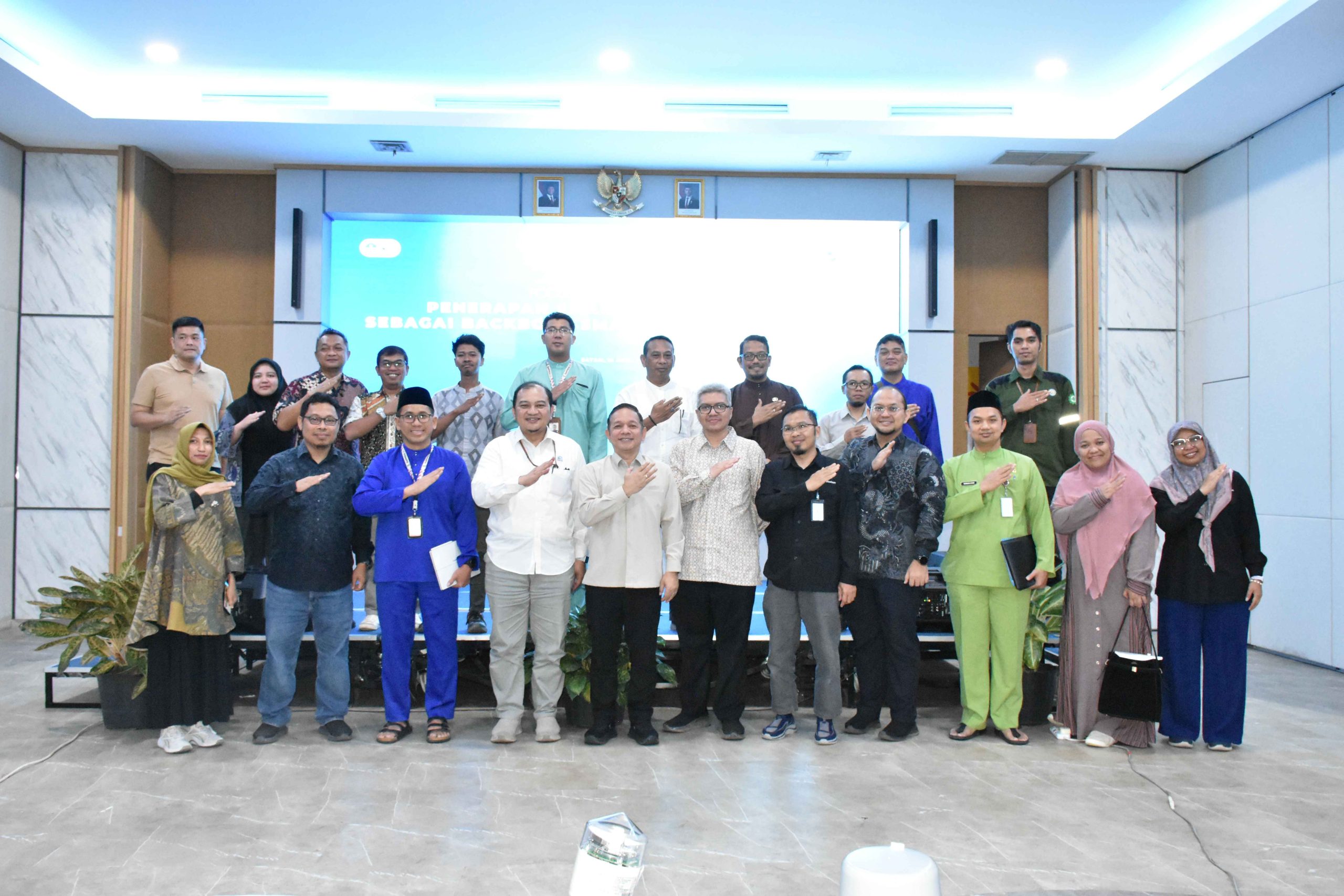
BATAM – Politeknik Negeri Batam (Polibatam) hosted a Focus Group Discussion (FGD) titled “The Implementation of Smart Street Lighting as the Backbone of a Smart City in Batam” on Thursday, April 16, 2026, at the 3rd Floor Auditorium of the Main Building. The event brought together stakeholders from government, industry, academia, and financing consultants to discuss strategies for implementing intelligent street lighting as a foundation for Batam’s smart city development.
The FGD highlighted energy efficiency as a key priority in Batam’s transition toward a sustainable smart city. Representatives from the Batam City Government noted that approximately 80 percent of public street lighting still relies on conventional systems with high energy consumption, while only 20 percent has transitioned to smart LED technology. This transformation is expected to reduce operational costs, improve public services, and support urban carbon emission reduction targets.
Beyond illumination, smart street lighting is envisioned as an integrated digital infrastructure for the city. The system enables real-time monitoring, adaptive lighting control, and integration with other urban systems such as traffic management and public safety.
From a regional management perspective, Badan Pengusahaan Batam (BP Batam) emphasized the strong potential of smart street lighting to enhance the competitiveness of industrial zones. The adoption of this technology is seen as a catalyst for developing greener, more efficient industrial areas that are increasingly attractive to investors. Furthermore, data generated from smart city systems presents new opportunities for regional revenue through data monetization.
Meanwhile, Polibatam, as a vocational higher education institution, underscored local technological readiness. The development of smart street lighting goes beyond energy efficiency, incorporating innovations such as adaptive lighting, automated response systems, and Internet of Things (IoT) integration for more effective data management.
From the industry perspective, business stakeholders stressed the importance of a clear roadmap for smart city implementation to avoid overly complex and counterproductive systems. The use of appropriate and integrated technologies is expected to deliver simpler, faster, and more efficient solutions, as demonstrated in various developed countries.

In terms of financing, Public-Private Partnership (PPP/KPBU) consultants proposed alternative funding schemes through collaboration between the government and private sector. In this model, the government focuses on regulation and project provision, while private entities support financing, development, and operations. Investment returns can be achieved through long-term payments or monetization of generated benefits. Additionally, combining funding sources such as PPP, CSR, and regionally owned enterprises is considered a realistic approach for implementing smart street lighting in Batam.
Through this FGD, stakeholders are expected to build strong synergy in realizing a street lighting system that is not only energy-efficient but also serves as the backbone of an integrated, sustainable, and globally competitive Smart City Batam.
Greetings from Polibatam!
#Polibatam #PolibatamOfficial #SmartCityBatam #SmartLighting #IoT #GreenCity #SustainableCity #VokasiUnggul #Kolaborasi #GreetingsfromPolibatam