

Farewell to Priyono Eko Sanyoto: A Champion of Vocational Human Resources from Batam for Indonesia’s Future
BATAM – In the early 2000s, Batam stood at a crucial crossroads. The manufacturing industry was experiencing significant growth, driven by foreign investment and its strategic proximity to Singapore and Malaysia. Industrial zones expanded rapidly, yet at the same time, a fundamental challenge emerged: the availability of truly job-ready human resources.
Within the framework of regional economic development, this condition reflected a mismatch between the education sector and industry needs. Graduates were available, but not always relevant. Industry was growing, but not fully supported by competent local talent. It was at this point that the presence of Politeknik Negeri Batam became significant. The institution did not emerge in a vacuum, but as a response to real development needs. Vocational education was positioned as a strategic instrument to bridge the gap between the education system and the world of work.
Behind this process stood a figure who worked with clear direction, even if not always visible on the surface: Priyono Eko Sanyoto.
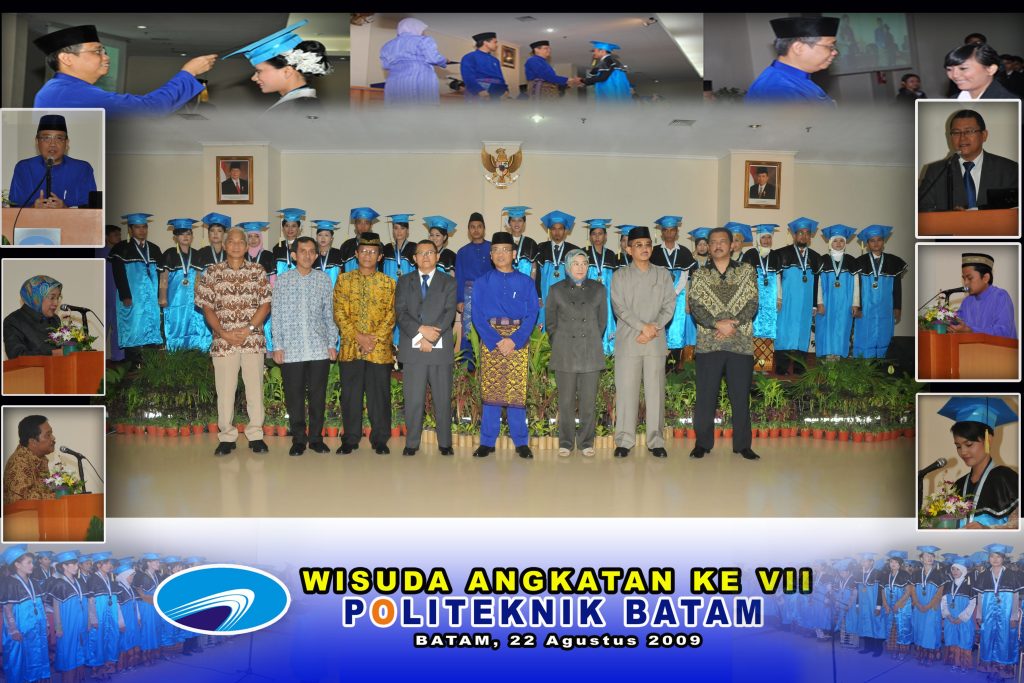
Through his steady leadership, he not only managed a growing institution, but also consolidated teams, built a professional work culture, and aligned a shared vision. One of his most fundamental achievements was successfully driving the transformation of Politeknik Batam into a public higher education institution in 2010, making it the first state polytechnic in the Riau Islands. This achievement was not merely administrative, but carried strategic implications for improving quality, governance, and access to higher education in the region.
As a director during the early stages of development, he did not merely perform administrative functions, but laid the epistemic and operational foundations of vocational education in Batam. He understood that education should not only produce graduates, but must also produce measurable and relevant competencies.
His approach can be understood within the framework of link and match, a concept that emphasizes the alignment between education and industry needs. However, in practice, this approach went beyond policy rhetoric. It was translated into curriculum design, practice-based learning systems, and strengthened partnerships with the business and industrial sectors.
This was not an easy process. In its early stages, building industry trust in an educational institution required time and consistency. However, the strategy proved successful. Students did not only gain knowledge, but also real work experience through internships and production-based learning.
Batam’s geographical advantage as a border region was also strategically leveraged. Its proximity to educational and industrial hubs in the region opened opportunities for international collaboration. In this context, partnerships with Nanyang Technological University and networks of higher education institutions in Malaysia became important components in strengthening human resource capacity, particularly for lecturers and teaching staff.
These collaborations were not merely symbolic, but contributed to enhancing academic competence, knowledge transfer, and educational standards. As a result, human resource development extended beyond students to include the broader academic ecosystem.
As alumni, we have directly experienced the impact of this approach. When entering the workforce, the adaptation process became relatively shorter. The competencies we possessed were not limited to theory, but had been tested in practice.
However, his contributions did not stop at the system level.
In academic interactions, he demonstrated the character of an intellectual who was open to dialogue. Discussions were not built on authority, but on argumentation. Students and alumni were encouraged to think critically, be data-driven, and solution-oriented. In this context, education was not merely seen as a transfer of knowledge, but as a process of shaping reasoning.
As Chairman of PP IAPOLBAT, I observe that his greatest legacy lies in the integration of vision, system, and people. He did not only build an institution, but also an ecosystem. The relationship between campus and industry was strengthened, the quality of graduates improved, and public trust in vocational education gradually increased.
The impact of this process is long-term. Batam is not only developing as an industrial area, but also as a region with increasingly competitive human resources at the regional level.
Now, as he has passed on, what is lost is not merely an educational figure, but a pioneer who, from the very beginning, understood the direction of the times and responded with real action.
From a development perspective, contributions like these form the foundation of progress. Infrastructure can be built relatively quickly, but human development requires vision, consistency, and sustainable leadership.
Farewell, Pak Eko.
The legacy you leave behind does not stop at the institutions that stand today, but continues in every graduate who works, in every lecturer who grows, and in every collaboration that continues to be built. In that sense, you remain present in the future you once envisioned.
Thank you for the knowledge, example, and dedication you have given. Your legacy will continue to live on—eternal, and inspiring every step we take.
Source: https://gokepri.com
Author: Dr. Fendi Hidayat, S.T., M.Kom
Chairman of PP IAPolbat and Chairman of the Batam City Education Council
#Polibatam#HumasKerjasamaPolibatam#PakEko#InMemoriam