

One Campus, One Action: Polibatam Launches a Waste Segregation Movement and Independent TPST Operations
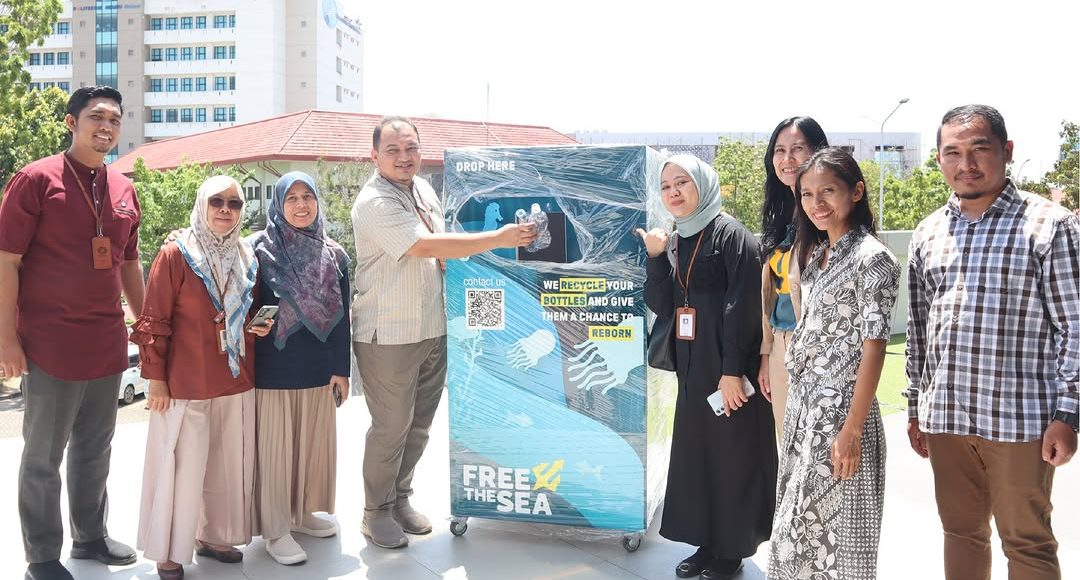
BATAM — The commitment to creating a sustainable campus was strongly affirmed at the Auditorium of Politeknik Negeri Batam through a joint declaration of Green Campus for Sustainability. The declaration marked the launch of the “Educational Campaign on Waste Segregation at Polibatam Campus” under the theme “One Campus, One Action: Polibatam’s Waste Segregation Movement.” All participants collectively expressed their commitment by reciting the Green Campus for Sustainability Declaration as a form of shared responsibility to begin change from within themselves and their immediate surroundings. The declaration emphasized that waste segregation is not merely a ceremonial program, but part of a broader transformation of campus culture toward environmental governance that is systemic, integrated, and sustainable.
The event featured two speakers: waste management practitioner Arifin Efendi Pakhpahan and academic Hendra Gunawan, with Muhammad Ghazali serving as moderator. Participants included lecturers, education support staff, student organization representatives, security personnel, cleaning service staff, canteen employees, and members of Dharma Wanita Persatuan (DWP) Polibatam. The event was also conducted in collaboration with MAPALA Polibatam as an implementation partner for the campus environmental movement.
System Integration: Sort–Process–Benefit
In his presentation, Arifin Efendi Pakhpahan explained that this movement has a strong normative foundation, referring to Law No. 18 of 2008 on Waste Management, Government Regulation No. 81 of 2012, and Batam City Regional Regulation No. 11 of 2017. He introduced the concept of Sort–Process–Benefit, which involves separating consumption waste, transforming organic materials into soil nutrients, and utilizing processed outputs for restoration purposes. Arifin also shared examples of making biodynamic compost and eco-enzyme from fruit peels as forms of household-scale organic waste processing. This approach is considered highly relevant for campus implementation through the active participation of all stakeholders. “Waste segregation is non-negotiable. If we do not start now, we are designing a disaster,” he said.
Meanwhile, Hendra Gunawan emphasized that waste segregation is the fundamental basis of a sustainable waste management system. Based on the material presented, segregation aims to reduce the volume of waste sent to landfills, facilitate recycling, and minimize environmental pollution. He explained that the campus will implement five waste categories in the future: organic, inorganic, paper, hazardous waste (B3), and residual waste. The standardization of waste bin colors is part of a visual education strategy to encourage greater discipline among the academic community in sorting waste. “Segregation is not merely a technical matter of disposing of waste; it is part of campus system integration. Failure to segregate waste is the root of environmental disaster,” he stressed.
Hendra also announced that Polibatam has begun operating its Integrated Waste Processing Facility (TPST) independently. In the initial phase, the TPST will prioritize processing organic waste into compost. “With an independent TPST, we are not only reducing the burden on local government in waste management, but also building the self-reliance of the campus ecosystem,” he said. In the future, processing will be expanded to include inorganic waste, creating a closed-loop system for campus waste management.
Inauguration of the 2026 Green Campus Ambassadors
The event also marked the inauguration of the 2026 Green Campus Ambassadors by the Vice Director for Planning, Finance, and General Affairs, Arniati, S.E., M.Si., Ph.D., Ak., CA., CPA. The four students inaugurated were Cantika Nur Hasanah, Muthia Syawallani, Ahmad Maulana Alfarabi, and Diaz Siddiq Anugerah. They are tasked with serving as campus ambassadors in promoting environmental awareness and conservation, supporting green campus policies, and educating the academic community to adopt environmentally friendly behavior.
Through the “One Campus, One Action” movement, Polibatam reaffirmed its commitment to building an environmentally conscious culture integrated into the campus management system. This initiative is expected to become a model of independent waste management in higher education institutions while also making a tangible contribution to reducing waste generation in Batam City. With the launch of the TPST and the strengthened role of the Green Campus Ambassadors, Polibatam underscores its position as a vocational education institution that excels not only in academics and technology, but also in environmental sustainability.
Author: Hendra Gunawan
#Polibatam #PolibatamPublicRelationsAndCooperation #PBLCampus #CDIOCampus #GreenCampus