

The Quiet Legacy of a Pioneer of Politeknik Negeri Batam: Remembering Dr. Ir. Priyono Eko Sanyoto, Former Director of Polibatam

BATAM – He departed quietly, just as he had built everything—silently, yet with lasting impact. From his steady hands, a small campus in a corner of Batam grew into a respected vocational institution, producing thousands of job-ready graduates. Priyono Eko Sanyoto left behind more than memories—he left direction.
On the roadside near the Hang Nadim Airport roundabout in Nongsa, on Saturday morning (April 11), a man was found lying unconscious. Nearby, a bicycle was seen resting. The sportswear he wore reflected a routine he often practiced: cycling.
The man was Dr. Ir. Priyono Eko Sanyoto, former Director of Politeknik Negeri Batam, affectionately known as Pak Eko—a figure more recognized for his work than for his words.
He was rushed to Bhayangkara Hospital of the Riau Islands Regional Police. However, fate had other plans. Pak Eko had passed away.
At the hospital, a quiet atmosphere prevailed. Members of the Politeknik Negeri Batam community—lecturers, administrative staff, and employees—arrived one after another. They came not only to bid farewell to a former director, but to a teacher, a father figure, and a pioneer.
His body was briefly prayed over at the campus he had built with full dedication. Afterwards, he was flown to Bandung, West Java, for burial.
For more than two decades, from 2001 to 2020, Pak Eko led Politeknik Negeri Batam. Yet long before that, he had already begun something that many at the time did not fully believe in.
In the early 2000s, Batam was growing as an industrial city. Factories were being established, and investments were flowing. Yet one aspect remained lacking: skilled local human resources.
Vocational education was not yet a primary choice. Many underestimated its value. It was within this gap that Pak Eko saw the future.
Born in Tanjungpandan, Belitung, on June 30, 1957, he studied at De Britto High School in Yogyakarta. He later continued his studies in Mechanical Engineering at Institut Teknologi Bandung (ITB), class of 1977. At the same institution, he began his career as a lecturer before pursuing postgraduate studies in France in 1986.
Despite his academic background and professional network, he did not choose the comfortable path. In 2000, he accepted the challenge of leading Politeknik Batam, which was still in its early stages.
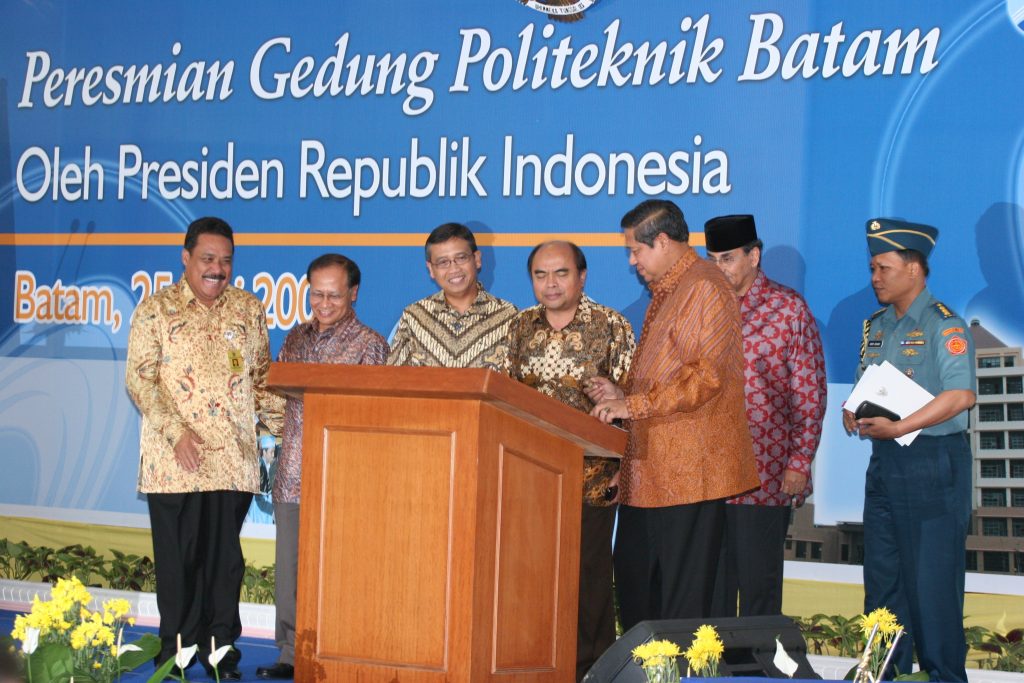
With limited facilities, only dozens of students, and minimal public trust, he started from scratch.
“Almost impossible,” some said at the time.
Yet, he kept moving forward. Since March 2001, Pak Eko had settled in Batam. He built the campus not only physically, but also culturally.
He was known to be approachable, egalitarian, and far from distant. His position never became a barrier.
“He always opened space for discussion. There was no oppressive sense of seniority,” recalled Prof. Dwi Kartikasari, the first professor at Politeknik Negeri Batam.
Under his leadership, one principle was always upheld: there must be no “little kings” on campus. Everyone must be equal, open, and respectful.
From these discussion spaces, great ideas emerged. One of them was the implementation of Project-Based Learning (PBL) as early as 2006—when the concept was not yet widely recognized nationally. Students did not only study theory, but were directly involved in real projects.
As a result, graduates became more job-ready.
“Pak Eko’s vision was far ahead of its time,” said Dwi.
Gradually, the once small campus began to demonstrate its strength.
In 2011, Politeknik Batam transformed into Politeknik Negeri Batam. In the same year, it broke the dominance of PENS in the National Robot Contest, which had previously been consistently won by that institution.
Achievements continued to emerge.
The campus also became the only institution with a Teaching Factory of Microelectronics, capable of producing IC packaging and PCB up to six layers—meeting industry standards.
Development did not stop there. In 2014, a Cessna G1000 aircraft facility was introduced to support the establishment of an Aircraft Maintenance Training Organisation (AMTO). Partnerships with major industries such as GMF and Lion Air were also established.
All of this stemmed from a simple idea he often repeated: graduates must be job-ready.
“Not just link and match, but plug and play,” was a phrase he frequently used.
The current Director of Politeknik Negeri Batam, Bambang Hendrawan, witnessed that long journey firsthand.
He stated that Pak Eko did not only build an institution, but also instilled courage.
“He always encouraged us to dare to start, even when something seemed impossible,” he said.
From only 42 students at the beginning, the institution now has around 13,500 students, with approximately 12,000 alumni. Study programs have expanded from three to 25, including fields such as semiconductors and aircraft maintenance, which remain rare in Indonesia.
However, for Bambang, the greatest legacy is not in numbers, but in values: integrity, honesty, and the courage to give space for the younger generation to lead.
Meanwhile, for Tatang Muttaqin, Director General of Secondary and Special Education, Pak Eko was more than just a leader.
“He was a mentor to many,” he said.
He still remembers how Pak Eko would always share ideas, even in simple moments—sometimes before meetings, sometimes through short messages.
From that, he learned an important lesson: building education is not only about institutions, but about nurturing the future.
In the early days, Pak Eko even went directly to industries—knocking on doors one by one, convincing them that the small campus he built could produce solutions.
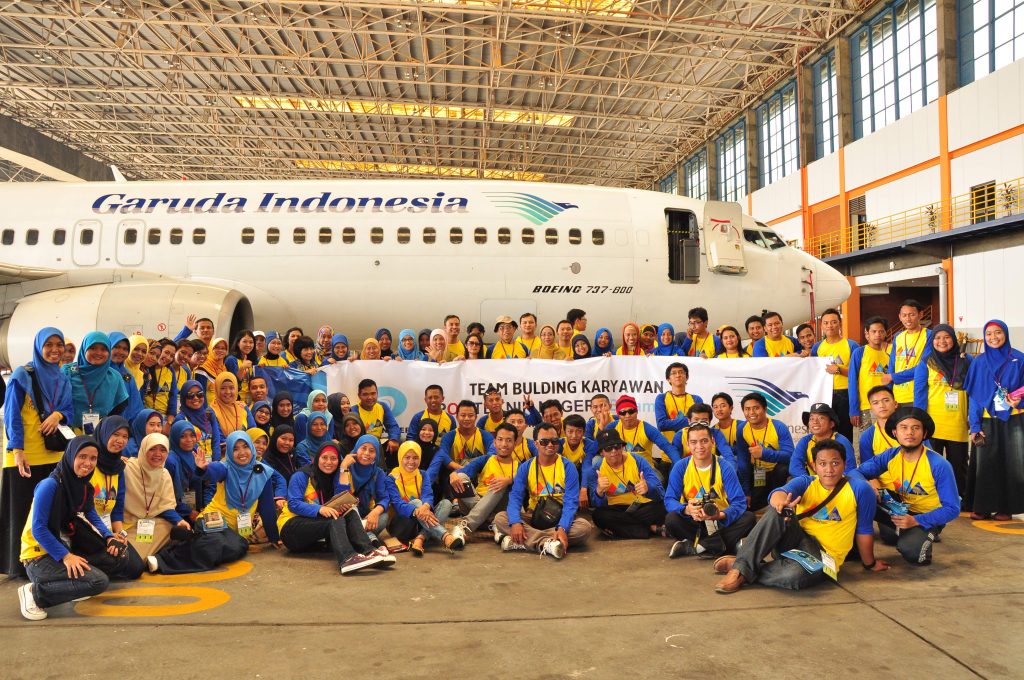
Gradually, trust grew. From being doubted, to being recognized.
For students, Pak Eko was a close figure. Sri Azizah, a 2016 alumna, still remembers the moment she was asked to be the MC at a graduation ceremony while she was still a freshman.
“It was my first time appearing at a major event,” she recalled.
For Azizah, that trust was simple, yet impactful.
She also witnessed the campus’s growth, including achievements in robotics competitions that reached the international level.
Now, that figure has passed on. Yet his legacy remains—in classrooms, in laboratories, and in every graduate stepping into the industrial world.
He may not have often stood in the spotlight. But from that quiet presence, he built something that was once considered impossible.
And as Tatang said, the work of a pioneer never truly disappears. It lives on in another form.
Source: Batam Pos
#Polibatam#HumasKerjasamaPolibatam#PakEko#InMemoriam